Factors to Consider When Choosing a Commercial Roof
Before selecting a roofing material, consider the following factors:
- Foot Traffic: Some roofs need to withstand frequent maintenance visits or equipment installation.
- Energy Efficiency: Reflective roofing materials can reduce cooling costs.
- Exposure to Elements: Wind, sun, chemicals, and heavy rains affect the durability of roofing materials.
- Longevity: Different materials have varying lifespans, from 10 years to 40+ years.
- Installation & Maintenance Costs: Initial investment and long-term maintenance impact overall expenses.
- Aesthetic Appeal: Some businesses prefer roofing that enhances the building’s appearance.
- Local Climate: Anaheim’s climate requires roofing that can handle sun exposure and occasional rain.
Top Commercial Roofing Systems
EPDM (Ethylene Propylene Diene Monomer)
EPDM is a durable, synthetic rubber roofing membrane commonly used for commercial flat roofs.
Pros:
- Cost-effective and easy to install
- Lightweight and highly durable (lasts up to 20 years)
- Resistant to scratches and scuffs
Cons:
- Absorbs heat, increasing indoor temperatures
- Prone to punctures and water damage
- Less visually appealing compared to other options
TPO (Thermoplastic Polyolefin)
TPO is a popular single-ply roofing material known for its energy efficiency and cost-effectiveness.
Pros:
- Reflects heat, reducing cooling costs
- Resistant to corrosion, mold, and mildew
- Lightweight and easy to install
Cons:
- Susceptible to fire damage
- Laminated top layer can shrink, crack, or deteriorate
- Multiple seams can weaken over time
PVC (Polyvinyl Chloride)
PVC is a high-performing roofing system offering durability and fire resistance.
Pros:
- Resistant to wind, chemicals, and moisture
- Eco-friendly and flexible
- Heat-welded seams prevent water infiltration
Cons:
- More expensive than TPO and EPDM
- Shrinks over time, leading to seam separation
- Cold weather can cause cracking
SPF (Spray Polyurethane Foam)
SPF roofing involves spraying liquid plastic that expands and hardens, creating a seamless and insulated roof.
Pros:
- Excellent energy efficiency
- Long lifespan (up to 40 years with proper maintenance)
- Airtight and watertight seal prevents leaks
Cons:
- Requires professional installation
- Expensive to remove
- Regular recoating is necessary for longevity
Modified Bitumen Roofing
Modified Bitumen (MB) is an asphalt-based roofing system reinforced with fiberglass or polyester.
Pros:
- Multi-layered protection against leaks and extreme temperatures
- Cost-effective with a proven track record
- Strong and flexible material
Cons:
- Requires proper drainage to avoid leaks
- Shorter lifespan (10-20 years) compared to other materials
- Installation can produce strong odors
Built-Up Roofing (BUR)
BUR consists of multiple layers of asphalt and reinforcing fabric, creating a durable surface.
Pros:
- Provides excellent waterproofing
- Resistant to UV damage and weathering
- Multiple layers enhance durability
Cons:
- Heavier than other roofing systems
- Requires professional installation
- Longer installation time

Asphalt Rolled Roofing
A budget-friendly option for low-slope commercial roofs, asphalt rolled roofing is a quick solution for certain buildings.
Pros:
- Inexpensive and easy to install
Cons:
- Short lifespan (approximately 10 years)
- Requires frequent maintenance
- Not energy efficient
Acrylic Roof Coatings
Acrylic coatings can be applied over existing roofs to extend their lifespan and improve efficiency.
Pros:
- UV-resistant and highly reflective
- Seamless and fully adhered membrane
- Easy to repair and maintain
Cons:
- Not ideal for areas with ponding water
- Must be applied at temperatures above 50°F
- Loses thickness over time
Why Flat Roofs Are Ideal for Commercial Buildings?
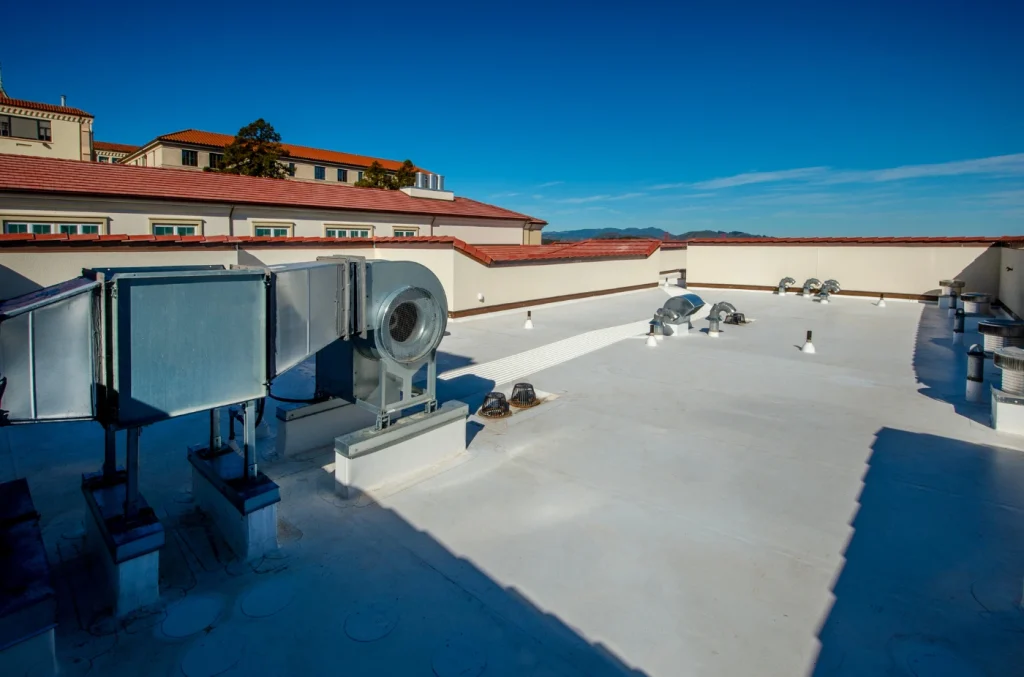
Flat roofs are widely used in commercial construction due to their practicality and cost savings. Key benefits include:
- Durability: Flat roofs are designed to withstand various weather conditions.
- Easy Maintenance: Accessing a flat roof is simpler, making inspections and repairs more manageable.
- Space Utilization: Ideal for installing HVAC units, solar panels, or additional storage.
- Energy Efficiency: Reflective coatings reduce heat absorption, leading to lower energy costs.
- Cost-Effective: Requires fewer materials and is quicker to install than pitched roofs.
Commercial Roofing Considerations for Anaheim
Anaheim’s climate plays a critical role in selecting the right commercial roofing system. Here are key factors to consider:
Heat & UV Resistance
Anaheim experiences warm temperatures and strong sunlight throughout the year. Roofing materials with reflective surfaces, such as TPO and PVC, help reduce cooling costs by reflecting UV rays instead of absorbing heat.
Rainfall & Drainage
While Anaheim has relatively low annual rainfall, proper drainage is still essential for flat roofs. BUR, Modified Bitumen, and SPF roofs provide strong water resistance when installed correctly.
Energy Efficiency
California’s energy efficiency regulations emphasize eco-friendly roofing solutions. Cool roofs, including acrylic coatings and TPO systems, can help businesses reduce energy consumption and comply with local standards.
Wind Resistance
Occasional strong winds require durable roofing that can withstand uplift forces. PVC and BUR systems provide excellent resistance to wind damage.
Finding the Right Commercial Roofing Contractor in Anaheim
A reliable roofing contractor ensures proper installation and long-term performance of your roof. When choosing a contractor, consider the following:
- Experience: Look for contractors with expertise in commercial roofing.
- Local Knowledge: A contractor familiar with Anaheim’s climate can recommend the best roofing materials.
- Certifications & Insurance: Ensure the contractor is licensed, insured, and certified.
- Warranty Options: A good warranty provides peace of mind for repairs and replacements.
- Customer Reviews: Check online reviews and testimonials to gauge customer satisfaction.
Get Expert Commercial Roofing Services in Anaheim
At Anaheim Roofing Pros, we specialize in high-quality commercial roofing solutions tailored to your needs. Whether you need a new roof installation, repairs, or maintenance, our expert team is here to help. Contact us today for a free consultation and find the best roofing solution for your business.
For professional commercial roofing services in Anaheim, call Anaheim Roofing Pros or request a quote online.